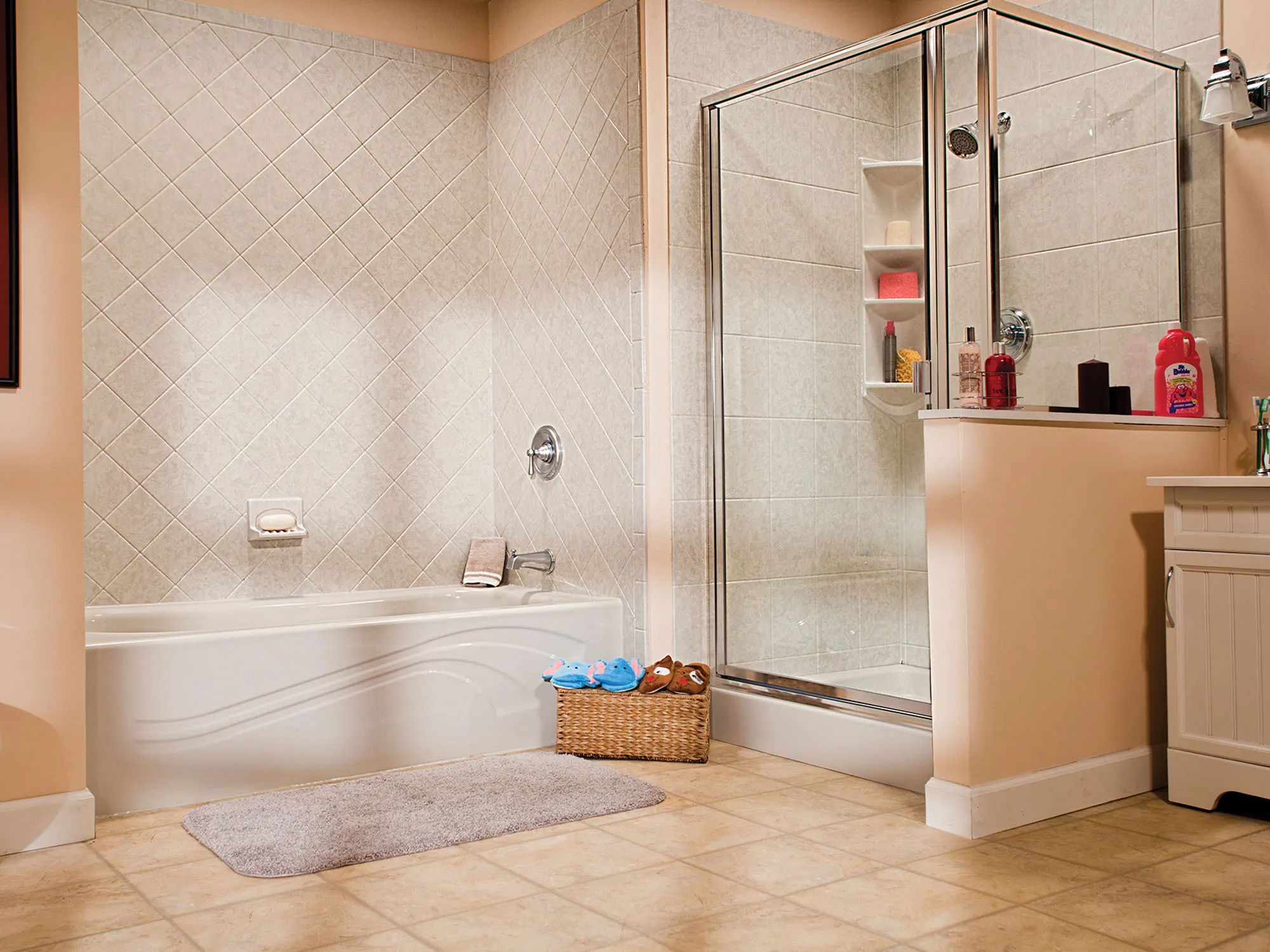
Before calling a Sturgis tub-to-shower conversion contractor, decide: (1) whether you want acrylic, solid-surface, or tile finish, (2) whether the drain stays put or moves, (3) whether the conversion is single-bathroom or full primary-bath remodel, (4) whether you need a permit, and (5) what your timeline is. Most Sturgis tub-to-shower conversions run 5 to 14 days, with the total set by the finish choice.
1. Pick Your Finish Material Before You Get Quotes
Quotes for tub-to-shower conversions vary by 3x or more depending on the finish material, and contractors will assume you have already made this choice. There are three real options for a Sturgis tub-to-shower conversion: acrylic (panel walls bonded to substrate, no grout), solid-surface (Onyx, cultured marble, or composite seamless panels), and custom tile (mortar-bed pre-pan with porcelain or ceramic tile walls and Schluter Kerdi waterproofing).
Acrylic is fastest and cheapest. Solid-surface is the middle option and the most-requested Sturgis choice in 2026. Custom tile is slowest, most expensive, and longest-lasting. A clear preference here lets you compare contractor quotes apples-to-apples instead of guessing what is included.
2. Find Out If Your Drain Stays in the Same Place
A tub drain sits roughly at the head of the tub, near the wall. A walk-in shower drain typically sits in the center of the shower pan (for tile) or near one wall (for solid-surface) or in a linear position along one wall (for curbless designs). If the existing drain location works for the new shower configuration, the conversion is straightforward. If it has to move, the plumbing scope grows and you may need to cut and patch the subfloor.
Ask any contractor walking the bathroom: “where does the drain need to be for the shower you are proposing, and does that match the existing tub drain location?” The answer tells you whether you have a simple conversion or a moderate plumbing rework. We tell Sturgis homeowners straight on the consultation which case theirs falls into.
3. Decide Whether This Is a Conversion or a Full Bathroom Remodel
A tub-to-shower conversion swaps the tub area for a shower. The vanity, toilet, flooring, paint, and lighting stay as-is. Acrylic is the most budget-friendly finish, solid-surface sits in the middle, and tile is the premium choice.
A full bathroom remodel that happens to include the tub-to-shower swap also gets you new vanity, counter, toilet, flooring, paint, lighting, and ventilation. That bumps the project into full-remodel territory for a standard bathroom, and higher still for a primary suite. Many Sturgis homeowners start at “just convert the tub” and end up at a full remodel after they realize how much of the bathroom they actually want to update. Decide which scope you want before you call.
4. Check Whether the Conversion Needs a Permit
In Sturgis and across Meade County, a tub-to-shower conversion that does NOT move the drain, change electrical, or alter the framing usually does NOT need a permit. A like-for-like fixture swap is exempt under most plumbing codes.
A conversion that DOES require a permit: moving the drain, re-pitching the drain, relocating supply lines, adding an in-shower light or fan circuit, or removing a wall (rare for a simple conversion but happens for primary-bath rebuilds). We pull the permit when it is needed; some contractors skip this step and the missing permit shows up later on resale. Ask about permitting on the consultation.
5. Get the Timeline Honest Before You Sign
An acrylic conversion runs 5 to 7 days on-site. A solid-surface conversion runs 7 to 10 days. A custom tile conversion runs 12 to 14 days. Anyone quoting “two days” for a real bathroom-grade conversion is talking about a glue-up wrap (which fails inside 3 years) or they are not including demo, plumbing, or finish work.
During the work, the toilet and sink remain functional. The tub and shower are out of commission. If yours is the only bathroom in the home, plan a temporary workaround (gym membership, family member’s house, or compress the timeline by 1 to 2 days with longer crew days).
Bonus: What Bruce Tells Sturgis Homeowners on the Consultation
Bruce Miller has been doing tub-to-shower conversions across the Black Hills for 50 years. On every Sturgis consultation he walks the bathroom, checks the existing drain pitch and supply lines, looks for any sign of water damage in the wall behind the tub, asks how often the tub is actually used (often: never), and discusses the three finish options. Most homeowners pick solid-surface after the conversation; the rest split between acrylic for budget and tile for premium.
The conversation usually ends with a written line-itemed estimate emailed within 48 hours. No high-pressure sales, no same-day discount tricks, no pre-pay for materials. Sturgis homeowners get a real quote based on the actual bathroom and the actual scope.
Common Questions
What is the cheapest tub-to-shower conversion in Sturgis?
An acrylic conversion is the most budget-friendly option. That includes tub demo, disposal, acrylic shower pan and 3-panel walls, pressure-balance valve, and basic glass or shower curtain rod. Anything cheaper is a glue-up wrap or excludes major scope items.
How long does a Sturgis tub-to-shower conversion really take?
Acrylic 5-7 days on-site, solid-surface 7-10 days, custom tile 12-14 days. We do not start a conversion until materials are on-site so the bathroom does not sit half-finished.
Will my home value go down if I remove my only tub?
If your home has only one tub and family-oriented buyers are part of your future resale audience, keep the tub. If you have multiple tubs, converting one to a walk-in shower is universally a value-add in Sturgis because the buyer pool here skews older and short-term-rental investors prefer walk-in showers.
Does a tub-to-shower conversion need a permit in Sturgis?
Not usually for a like-for-like swap. Yes if the drain moves, supply lines relocate, or electrical changes are made. We handle permitting when it is required.
Can I keep using my bathroom during the conversion?
The toilet and sink stay functional throughout. The tub and shower are unavailable during the work.
How to Vet a Sturgis Tub-to-Shower Conversion Contractor
Once you have your finish preference and a sense of scope, the contractor vetting step comes down to four questions. First, ask whether the contractor has a South Dakota general contractor’s license. Tub-to-shower work in Meade County falls under the general contractor scope when plumbing or electrical is involved; an unlicensed contractor cannot pull permits, and a job without permits creates problems at resale.
Second, ask for a written line-itemed estimate with demo, plumbing rough-in, waterproofing method, finish installation, and cleanup called out separately. A flat-rate quote tells you nothing about what is and is not included. Hidden scope items are the number one source of mid-project surprise costs on Sturgis conversions.
Third, ask how long the crew has been doing tub-to-shower work specifically. Bathroom remodeling is a different skill set from general construction. The waterproofing step alone (pre-pan slope, Schluter Kerdi membrane application, seam treatment at inside corners) requires repetition to get right. Ask for photos of recent completed showers, not kitchens or decks.
Fourth, ask about the warranty. Waterproofing failures on shower pans typically show up within 12 to 36 months as grout cracks, soft drywall behind the tile, or water staining on the ceiling below. A contractor confident in their waterproofing offers a minimum two-year warranty on the pan and walls. Acrylic and solid-surface conversions have manufacturer warranties of 20 to 50 years on the material itself; labor warranty is typically one year for installation defects.
Before any tub-to-shower quote, Bruce checks the drain pitch, tests the supply lines for pressure, and opens the inspection panel (or removes a piece of tile) to look for any existing water damage. Catching a half-inch of subfloor rot before the conversion starts is the difference between a quick fix and a much costlier structural repair mid-project. Fifty years of bathroom work teaches you what is behind the walls before you ever pull a tool.
What Sturgis Homeowners Often Overlook
The ventilation fan is the most commonly overlooked piece of the tub-to-shower conversion. A shower generates significantly more steam than a tub. If the existing bathroom fan is undersized (below 80 CFM for a standard bathroom or 110 CFM for a larger walk-in shower space), you will get condensation on the mirror, moisture behind the drywall above the shower, and eventually mold growth. We always check fan capacity during the consultation and include an upgrade to a proper sone-rated fan if the existing unit is inadequate. This add-on is a small line and prevents expensive moisture remediation down the road.
The second overlooked item is niche placement. Shampoo and soap need somewhere to live that is not a corner shelf stuck to the wall with suction cups. A recessed niche built into the shower wall during the conversion is a small add depending on size and tile layout, and it changes the daily experience of using the shower for the next 30 years. Built-in niches are not available as a retrofit; they have to be planned at rough-in. Ask for them on the consultation, not after the walls are closed.
Ready for a Sturgis Tub-to-Shower Conversion?
Free in-home consultation with Bruce. Veteran-owned. 50 years of bathroom work across the Northern Hills.
Get Free Estimate Call (605) 636-2284Read more on our Sturgis Tub-to-Shower Conversions page or learn about custom walk-in showers.